A message from our Executive Director, Scott Nova
This year marked a key moment of reflection for the Worker Rights Consortium, as we commemorated our 25th anniversary.
Anniversaries prompt reflection, but they also offer clarity. Over a quarter century, the WRC has helped define what meaningful accountability looks like in apparel supply chains. Since our founding, the WRC has deployed and refined a labor standards enforcement and remediation approach that has grown into a global-scale corporate accountability mechanism. In 2025 alone, we restored $16 million to workers in wages they rightfully earned but would otherwise have never received.
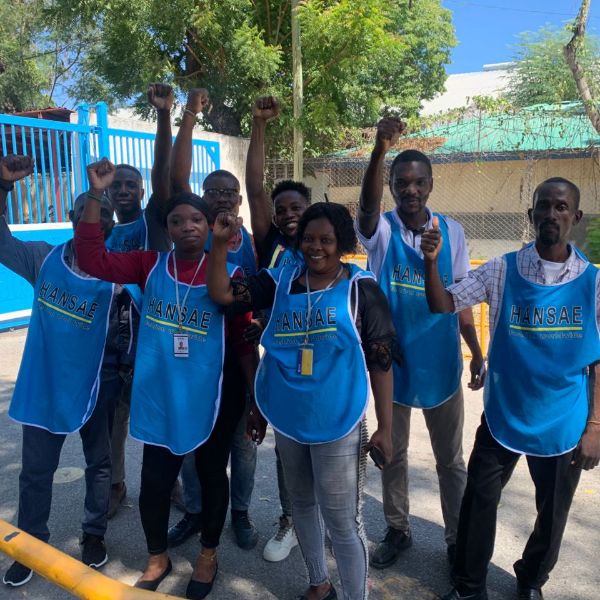
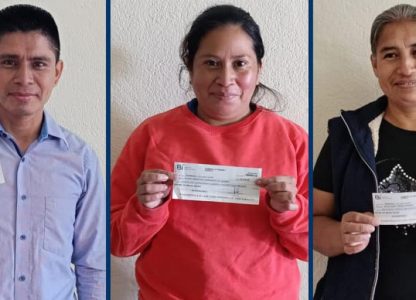
Workers at Hansae Haiti who received up to two and a half years of back wages after being illegally fired
Permanently operating in 12 countries, our local teams rigorously investigate worker complaints and document rights violations. We use a framework that grounds robust findings in local labor laws, international standards, and brands’ own labor rights promises. By consistently ensuring compliance with labor standards once routinely ignored, the WRC’s successes in driving corporate accountability for labor abuses have tangibly lifted the industry bar on respect for the rule of law.
Severance payments, enshrined in most national laws, often went unpaid by factories without any corrective action from brands. Held accountable through numerous WRC interventions, many brands now respond to severance as an incontestable right. Of the more than $100 million in denied severance the WRC has delivered to workers, the bulk has been paid by brands from their own pockets.
At this critical moment, as instability grows and workers face unprecedented threats, our tried and tested method to ensure decent conditions and wages for the world’s garment workers is more essential than ever.
How Our Work Has Shaped the Broader Industry
The WRC was founded in 2000 through the leadership of anti-sweatshop student advocates who asked their universities to act upon a simple idea: the workers who sew goods bearing a university’s name should have their basic rights respected. Universities responded across the US and Canada by adopting the first contractually binding labor standards in modern global supply chains. This required hundreds of brands that make university logo products, such as Nike and Adidas, to publicly disclose the factories where they produce these goods and ensure they meet just labor conditions.
Recognizing that an effective monitoring and remediation mechanism must be entirely free of industry influence, universities established the WRC as an independent verifier of code compliance. Since then, our steadfast commitment to advancing rights for workers has been unwavering.
Together, these innovations were unprecedented—and transformative. The WRC used university standards to achieve sweeping gains for worker rights in the collegiate space, and we have leveraged these gains to advance worker rights industry-wide.
In response to the student activism that led to the creation of the WRC, universities required the first-ever public disclosure of factory locations by apparel brands. Building on this precedent, we have worked to ensure that supply chain transparency is now the industry gold standard, with most leading brands publicly disclosing the garment factories where their products are made. Our publicly accessible database of factories producing collegiate licensed goods has been published for over two decades. We identify the licensee brands using each factory, reflecting our commitment to supply chain transparency—a value that drives every component of our work.
Through our enforcement efforts on behalf of more than 150 universities, covering more than 1,500 factories, we built a model of worker-centered monitoring. This has spurred a larger movement to end industry-led social auditing and to replace voluntary standards with binding mechanisms of enforcement that are as effective as those pioneered by universities.
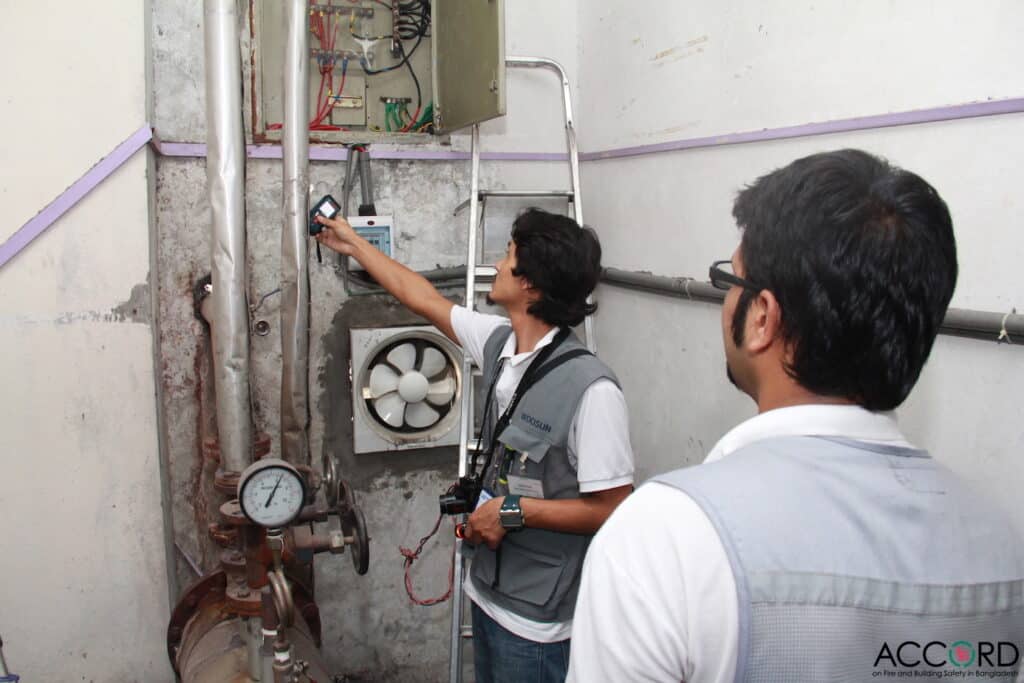
This work has led to groundbreaking initiatives, spearheaded by the WRC, that target the structural nature of abuses rooted in a lack of enforceable regulation. Our contributions include the establishment and ongoing support of binding safety accords that have eliminated deadly factory hazards for millions of workers in Bangladesh and have now expanded to Pakistan. The WRC launched this initiative even before the devastating Rana Plaza collapse by drawing on our core model of binding university standards and applying it to global building safety crisis.
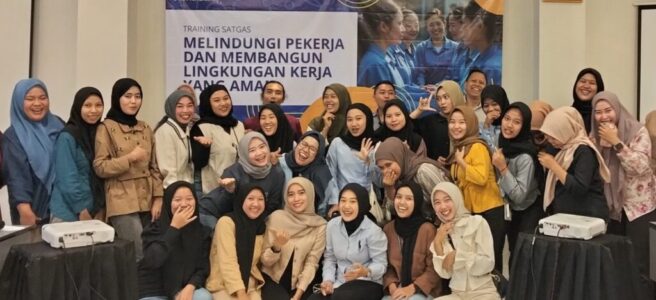
Further, in response to the persistent prevalence of violence and harassment of women in factories around the world, we worked to create binding gender justice agreements and programs in Lesotho and Indonesia, which have shifted patriarchal norms and applied the transformative ILO Convention C190.
The WRC also worked with a forward-looking apparel brand and a national union federation to launch the only garment factory in global supply chains to pay workers a genuine living wage.
As the WRC’s work has grown, we have never wavered from the principle that stands at the heart of our efforts: corporate accountability must be real. When rights are violated, workers must receive full remedy—not symbolic gestures or partial payments, but full restitution that ends abuses, restores dignity, and sends a message that worker rights cannot be violated with impunity.
The WRC’s Impact Across the Years
To mark this milestone, we took some time to reflect on the cumulative impact of the extraordinary outcomes we have achieved:
- Remedies secured at more than 700 factories in 24 countries for more than 715,000 workers;
- $175 million in legally owed wages and benefits recovered, equivalent to more than 10 million days of wages for workers; and
- Reinstatement for more than 1,800 worker leaders who were fired for exercising their associational rights and restoration of freedom of association for 266,000 workers.
Although these numbers represent real change, we know that impact cannot be measured in numbers alone. Through our pursuit of remedy for labor rights violations, the WRC has contributed to meaningful change in the lives of workers by materially improving their livelihoods. For many workers, the compensation secured through our interventions is the largest sum they will ever see: these funds enable children to return to school, families to access healthcare, and, critically, women to gain a degree of financial independence.
The success of our approach demonstrates that real accountability in global supply chains is not only achievable, but can be realized at scale.
The Challenging Road Ahead
Today, the need for this work is more urgent than at any point in our 25-year history. Civic space is shrinking in many garment producing countries. We are witnessing a surge of criminalization of unionists for the peaceful exercise of their rights, escalating corporate capture of policy and judicial spaces, and the persistence of brands’ preference for self-regulation over genuine accountability for the rights of the workers who make their clothes. Tariff policy, climate impacts, and technological change are combining to destabilize supply chains, increasing both downward pressure on wages and conditions and worker precarity.
In this environment, where labor abuses are easier to commit and harder to challenge, our approach—grounded in grassroots local partnerships and able to leverage the power of global brands—is indispensable.
Although this is a moment of profound risk, we are determined as ever to utilize every opportunity. Governments are taking tentative but significant steps toward meaningful regulation of brands’ supply chain practices; civil society is forging new alliances; and workers continue to organize with extraordinary courage. The WRC will seize new opportunities to help build a world where workers have the power to shape their conditions, earn a living wage, and organize without fear—and where all brands are held accountable for what happens in their supply chains.
The continued support of our partners and allies is vital. At a time when supply chain transparency is crucial to achieving real corporate accountability, we are redoubling our efforts to communicate our work and expand our reach. That’s why we have revitalized the WRC’s visual identity and messaging, most notably through this redesigned website, to ensure our communications are more accessible, compelling, and impactful than ever.
The WRC’s work has only been possible because of the workers who have refused to accept exploitation as inevitable; the unions and civil society organizations who lead the fight for justice; and our own team of field investigators whose skill and persistence make accountability a reality. To the universities, students, and labor advocates who have stood with us to build a mechanism that proves worker rights are achievable in global supply chains, thank you for your commitment. It continues to be a great honor to work alongside people across the globe who show bravery and commitment every day.
Scott Nova
Executive Director, Worker Rights Consortium
Join our newsletter
Sign up to the WRC’s mailing list to stay updated on our work.